
The Atari Gamestation Go Feels Like a System Built for Fans
A Love Letter to Atari’s Greatest Hits
Curated Game Library
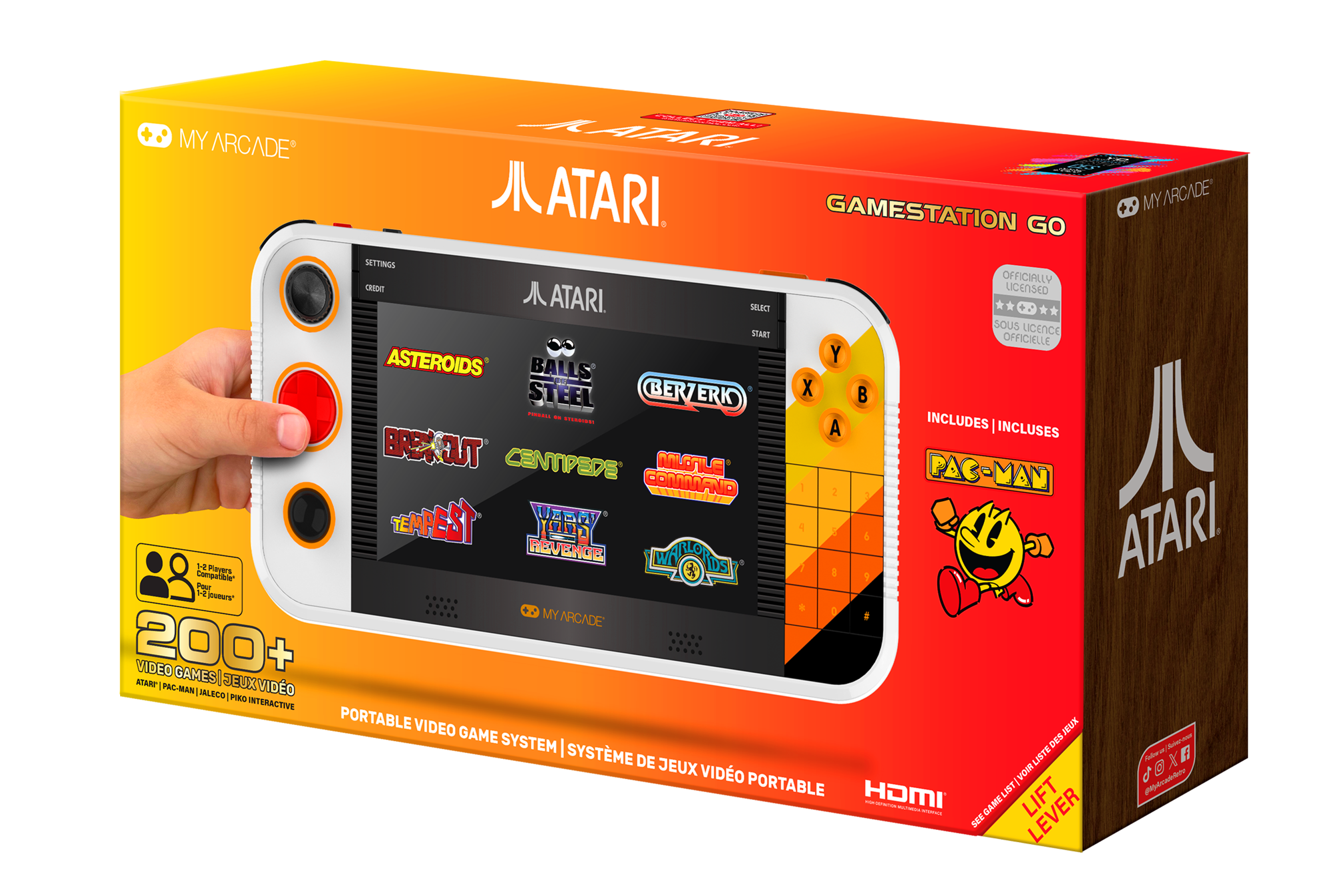
The Atari Gamestation Go arrives with 50+ pre-loaded games spanning three distinct eras: the legendary Atari 2600 home console, the arcade cabinets that defined a generation, and the less celebrated but capable Atari 7800. What makes this selection remarkable isn’t just the sheer number of titles, but the intentionality behind which games made the cut. You’ll find the obvious classics—Asteroids, Centipede, Pac-Man—sitting alongside deeper pulls like Millipede and Tempest that most casual players might overlook.
📋 Table of Contents
A Love Letter to Atari’s Greatest Hits
Curated Game Library
Deep Cuts Beyond the Obvious
The Handheld Design Nails Portability Without Sacrificing Feel
Form Factor and Controls
Screen and Display Quality
Emulation Quality That Respects the Source Material
Authentic Gameplay Experience
Visual and Audio Fidelity
Features That Show Thoughtful Design Choices
Accessibility and Convenience
Bonus Content and Extras
Who This System Is Really For
Nostalgia-Driven Collectors
Casual Retro Gamers
The Authentic Atari Fan
Related Articles
Frequently Asked Questions
Can you add more games to the Gamestation Go after purchase?
How does the battery life compare to other portable gaming devices?
Are the games exactly the same as the original arcade and console versions?
Does the system support multiplayer or competitive play?
This curation philosophy matters. Rather than padding the system with dozens of forgettable titles to inflate the game count, Atari has opted for quality representation. Every game on this device is genuinely playable and worth your time; there’s no filler diluting the experience. The arcade DNA runs throughout the library, which makes sense given that Atari’s reputation was built on coin-op gaming. That’s not nostalgia talking—it’s a deliberate acknowledgment of where the company’s creative energy actually came from, and the selection reflects that understanding.
Deep Cuts Beyond the Obvious
What separates a system designed by fans from one designed purely for market appeal becomes evident when you dig into the secondary tier of games. Titles like Defender, Joust, and Robotron: 2084 represent the arcade’s most mechanically sophisticated period, yet they’re often skipped over in favor of more immediately recognizable names. Finding them here suggests the developers understood that true Atari enthusiasts aren’t looking for a greatest-hits compilation—they’re looking for a complete picture. The 2600 library includes both System 16-bit conversions and original cartridge titles, acknowledging that fans care about the full ecosystem, not just the crown jewels.
This breadth of representation creates something unexpected: a handheld that teaches as much as it entertains. You might pick up the device to play Galaga, but you’ll discover Lunar Lander or Warlords and find yourself spending an afternoon exploring corners of Atari’s catalog you’d never encountered. That sense of discovery feels intentional, as if someone who actually grew up with these games sat down and asked, “What would make this collection feel complete?”
The Handheld Design Nails Portability Without Sacrificing Feel
Form Factor and Controls
Compact doesn’t mean cramped. The Gamestation Go uses a clamshell design roughly the size of a classic Game Boy, which means it actually fits in your pocket—a feature that shouldn’t be taken for granted in an era of increasingly oversized gaming handhelds. The form factor feels deliberate, honoring the portable gaming aesthetic of the 1980s while using modern materials that don’t feel fragile or dated. Open it up, and you’re greeted with a responsive D-pad and action buttons positioned in familiar layouts that arcade and console veterans will recognize immediately.
Button feedback matters more than you’d expect when playing games that demand split-second inputs. The action buttons deliver satisfying tactile response for rapid-fire gameplay in titles like Galaga and Defender, where timing and precision separate high scores from game overs. The D-pad doesn’t feel mushy or overly sensitive; instead, it provides the kind of deliberate resistance that makes directional changes feel intentional rather than accidental. During extended play sessions—and these games absolutely encourage extended play—the weight distribution remains balanced, reducing hand fatigue in a way that cheaper handhelds simply don’t manage.
Screen and Display Quality
A 3.5-inch color LCD screen might sound modest until you actually look at what Atari’s pixel art looks like when rendered cleanly. The display delivers vibrant visuals that make 40-year-old graphics feel crisp and appealing rather than blurry or washed out. This matters because the visual presentation is part of how you experience these games; poor screen quality can undermine the entire experience, making even beloved classics feel like compromised versions of themselves. Here, the screen does the artwork justice without oversaturating colors or introducing artificial sharpness that distorts the original aesthetic.
The hinge mechanism deserves specific mention because it’s where many portable devices fail. This one doesn’t feel loose or cheap; the clamshell closes with satisfying precision and holds its position whether you’re playing in handheld mode or propping it up on a table. That durability suggests this device is built to last, not to feel disposable after a year or two of regular use.
Emulation Quality That Respects the Source Material
Authentic Gameplay Experience
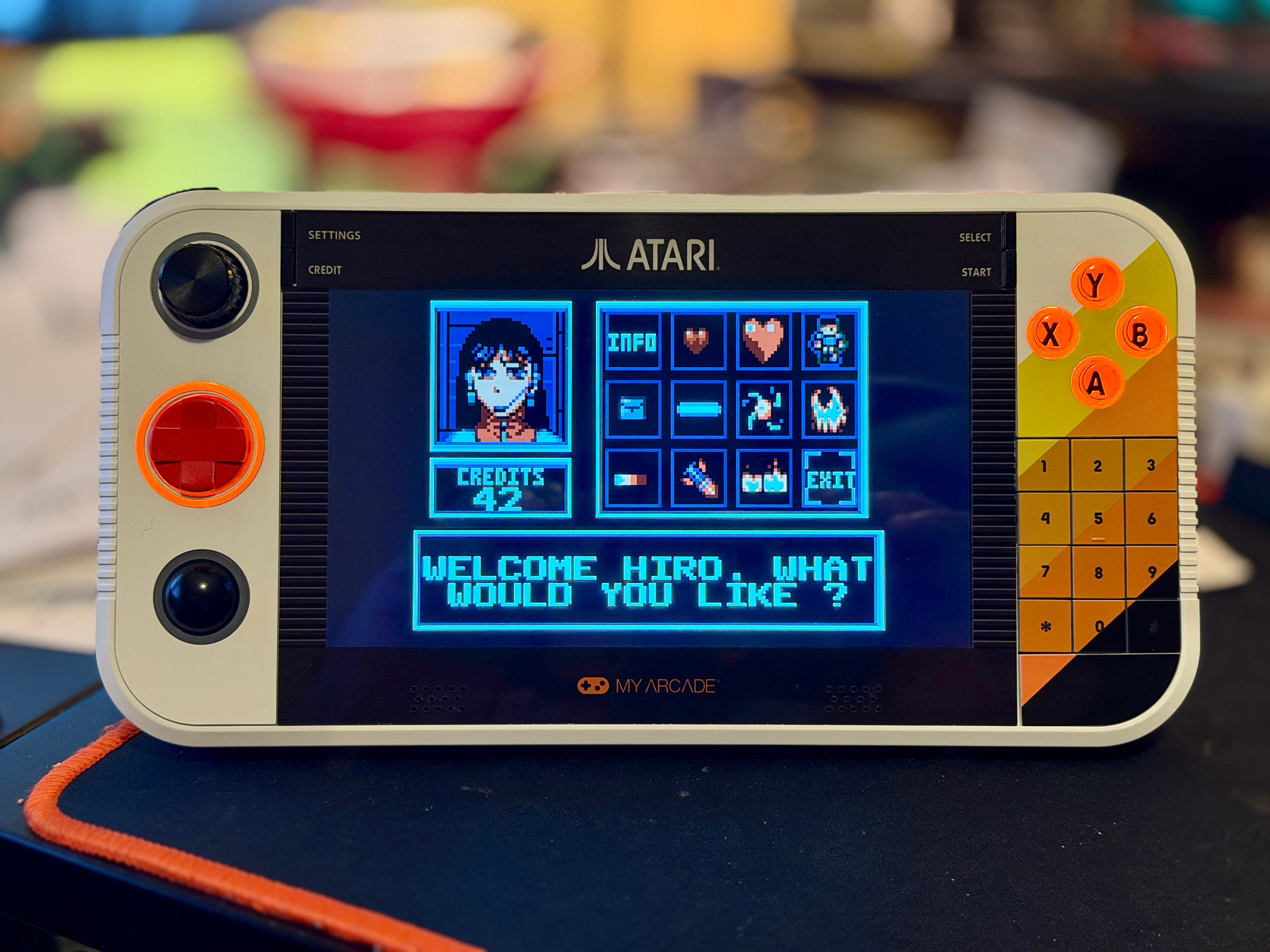
Earlier Atari plug-and-play devices sometimes cut corners with emulation, introducing input lag or stuttering that made games feel sluggish compared to their original hardware versions. The Gamestation Go avoids these pitfalls entirely. The emulation handles sprite flicker and collision detection accurately, which means the games behave exactly as you remember them—not as idealized versions you wish they’d been. This distinction matters enormously for games like Asteroids, where timing and physics feel fundamentally different if the emulation isn’t precise.
Frame pacing remains consistent across the entire library, a technical achievement that casual players might not notice but dedicated gamers absolutely will. When you’re threading a narrow gap in Defender or timing a jump in Joust, even minor frame inconsistencies become apparent and frustrating. The system maintains stability across all 50+ titles, which speaks to the engineering effort that went into this device beyond simply loading ROMs onto a handheld.
Visual and Audio Fidelity
The iconic bleeps and bloops that defined Atari’s audio signature are reproduced faithfully, without artificial enhancement or digital distortion that some modern emulators introduce. Sound reproduction might seem like a secondary concern compared to gameplay, but it’s integral to how these games feel. The distinctive audio of Asteroids or the chirpy tune of Pac-Man aren’t just nostalgic flourishes—they’re part of the game’s identity, and getting them right matters. The system succeeds here, delivering audio that sounds authentic rather than enhanced or diminished.
What’s particularly thoughtful is the inclusion of adjustable screen filters and scanline effects. You can customize the visual presentation to your preference, toggling between a clean digital look and a more authentic CRT-style appearance with scanlines. This flexibility acknowledges that different players have different preferences about how they want their retro games to look, and rather than forcing a single aesthetic, the system lets you choose. That’s the kind of detail that suggests genuine consideration for the player experience.
Features That Show Thoughtful Design Choices
Accessibility and Convenience
Save states represent perhaps the most significant quality-of-life improvement over original hardware. You can pause mid-game and resume later, a feature that wasn’t possible on original Atari consoles or arcade cabinets. This isn’t about making games easier—it’s about acknowledging that modern life doesn’t always allow for uninterrupted gaming sessions. Being able to stop in the middle of a Tempest run and return to exactly that moment later transforms how you interact with these games.
The rechargeable battery eliminates the constant drain of AA or AAA replacements that plagued earlier portable gaming devices. You’re looking at roughly 4-6 hours of continuous play depending on screen brightness, which is genuinely impressive for a device this size. The convenience factor extends beyond just not needing batteries; it means you can actually take this device on trips without worrying about battery availability.
Bonus Content and Extras
Bundled digital manuals and historical information about each game provide valuable context, especially for younger players unfamiliar with Atari’s catalog. These aren’t just scanned original manuals—they’re thoughtfully presented guides that explain what you’re looking at and why these games mattered. For someone discovering Robotron: 2084 for the first time, understanding the game’s design philosophy and historical significance enriches the experience beyond simply playing it.
The system supports both portrait and landscape orientations depending on the game, optimizing screen real estate for different titles. Some games benefit from a wider horizontal view, while others work better in portrait mode. This flexibility shows attention to how different games actually play, rather than forcing everything into a single orientation for simplicity. The built-in speaker delivers surprisingly robust audio for a handheld device, though headphone support is also available if you prefer a more private experience.
Who This System Is Really For
Nostalgia-Driven Collectors
If you grew up pumping quarters into arcade cabinets or spent afternoons with an Atari 2600, this device speaks directly to your experience. You’ll appreciate the deliberate focus on quality over quantity, with every game on the system being genuinely playable and worth your time. The appeal isn’t just about reliving old memories—it’s about having a curated, portable museum of Atari’s best work in your pocket.
Casual Retro Gamers
This system doesn’t pretend to be something it isn’t. It’s not trying to compete with modern gaming or offer cutting-edge graphics; instead, it embraces what made Atari special and presents that experience in a contemporary package. For someone interested in retro gaming but not necessarily obsessed with it, the Gamestation Go offers an accessible entry point without overwhelming you with options or requiring deep technical knowledge to enjoy.
The Authentic Atari Fan
Most importantly, this feels less like a commercial product and more like something made by people who actually understand and respect Atari’s legacy. The game selection, emulation quality, and thoughtful features all point toward developers who grew up with these systems and wanted to create something that honored them properly. That authenticity is difficult to fake, and it’s what ultimately sets this device apart from previous Atari nostalgia products that felt more like cash grabs than genuine tributes.
Related Articles
Frequently Asked Questions
Can you add more games to the Gamestation Go after purchase?
The system comes with a fixed library of games, and there’s no expansion cartridge slot or way to load additional titles. You’re working with the 50+ pre-loaded games, so your enjoyment depends on how much you value the curated selection provided. This limitation is intentional—it ensures every game on the system meets quality standards rather than allowing users to load questionable ROMs.
How does the battery life compare to other portable gaming devices?
You can expect roughly 4-6 hours of continuous play depending on screen brightness settings and which games you’re playing. The rechargeable battery is a significant advantage over devices that require constant AA or AAA battery replacements, and the charging time is reasonable enough that you won’t feel like you’re constantly tethered to a power outlet.
Are the games exactly the same as the original arcade and console versions?
The emulation is highly accurate, but you may notice very minor differences in timing or audio compared to original hardware. For practical purposes, you’re getting the authentic experience without needing to hunt down decades-old arcade machines or original consoles. The differences are negligible for casual play and only noticeable to players chasing specific high scores on particular titles.
Does the system support multiplayer or competitive play?
Most games support single-player only, though some titles include two-player modes using alternating turns. You won’t find simultaneous multiplayer like you might on original arcade cabinets, so it’s primarily a solo experience. This limitation reflects the handheld form factor rather than any emulation shortcoming.

